

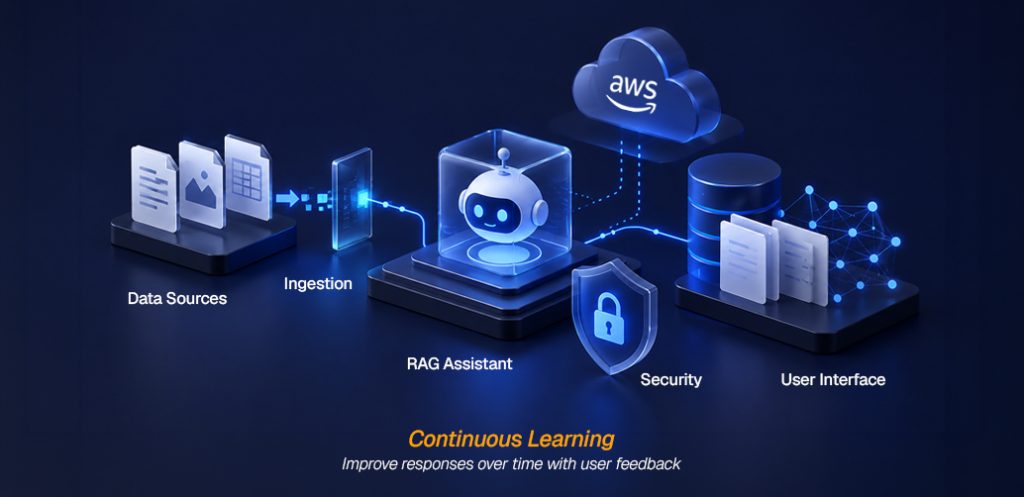
In most enterprises, the right answer is often buried in a document nobody can find fast enough. Regulatory circulars, compliance policies, product guidelines, and SOPs pile up by the thousands, and an employee’s real problem is not a lack of information. It is knowing which document holds the answer, and trusting what comes back.
Banking and financial services feel this most sharply, so it makes a useful anchor example. Knowledge workers there can lose 5 to 8 hours a week just searching for information, decisions stall while people wait on a handful of subject matter experts, and every delayed policy update raises real compliance exposure. The fix is not another search bar. It is a secure, fully managed RAG knowledge assistant on AWS that answers questions in plain language and shows its sources.

How it works
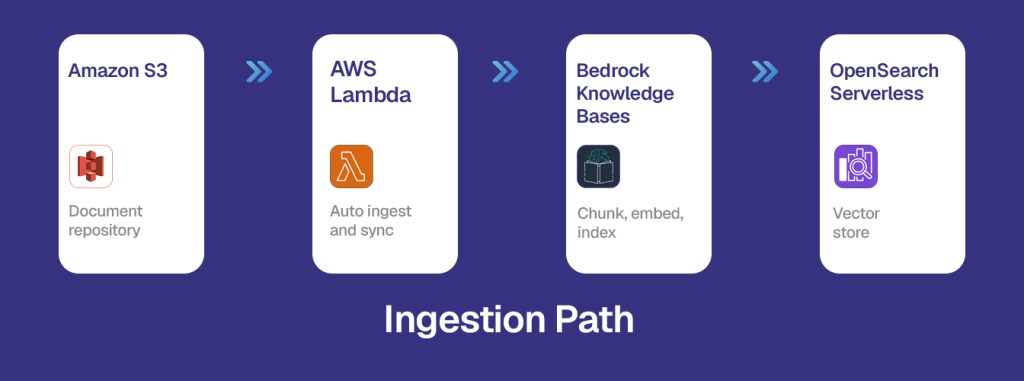
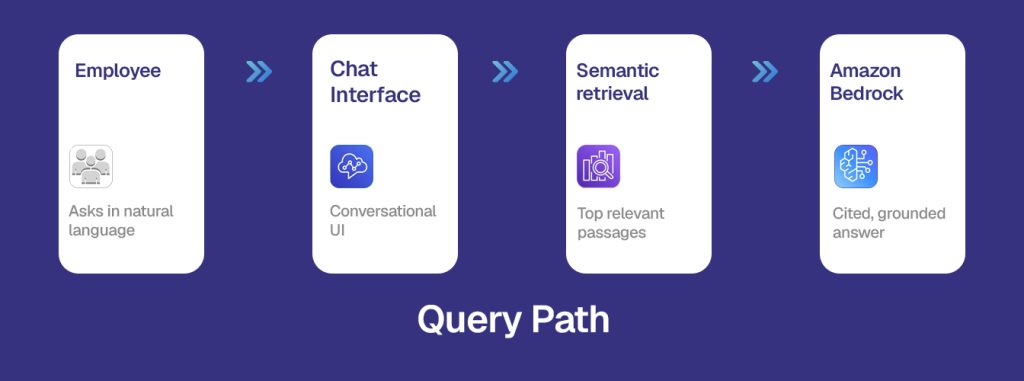
Instead of asking a language model to answer from whatever it memorised in training, a RAG (Retrieval-Augmented Generation) assistant grounds every response in the organisation’s own documents. There are two paths: an ingestion path that keeps the knowledge base current, and a query path that retrieves relevant passages and generates a cited answer from them. Here is the architecture, built entirely on managed AWS services.
What actually happens on a query
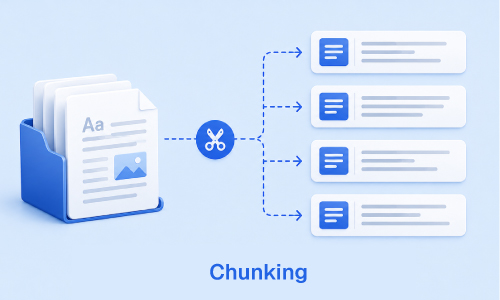
Chunking. Documents are split along natural boundaries like sections and headings, not fixed character counts, so a retrieved passage carries enough context to stand on its own.
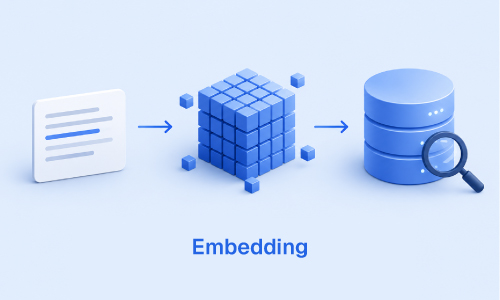
Embedding. Each chunk is turned into a vector using an embedding model on Bedrock and stored in OpenSearch Serverless, so meaning, not just keywords, can be searched.
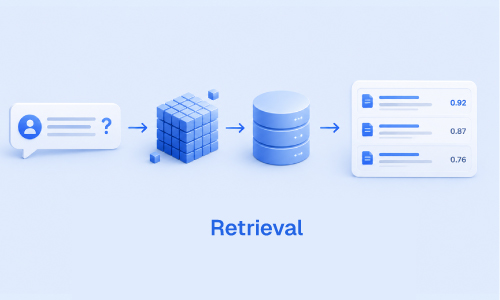
Retrieval. The employee’s question is embedded the same way, and the closest passages are pulled back. A hybrid of semantic and keyword search handles both plain-language questions and exact terms like policy numbers.
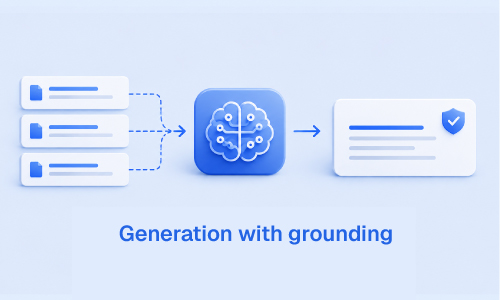
Generation with grounding. Bedrock writes the answer using only those passages, and the grounding check rejects anything the sources do not support before it reaches the user.
A grounded answer, end to end
Here is what that looks like in practice, using a typical compliance question.
EMPLOYEE ASKS
“What is the current turnaround time we must meet for a customer grievance under the latest circular?”
ASSISTANT ANSWERS
Grievances must be acknowledged within 3 working days and resolved within 30 days of receipt. Complaints unresolved past 30 days must be escalated to the nodal officer.
Source: Grievance Redressal Policy v4.2, section 5.1
The value is not just the answer. It is the citation next to it. The employee can open the exact section and confirm it, and if the circular is updated tomorrow, the ingestion path makes the new version answerable the same day.
What makes it production-ready
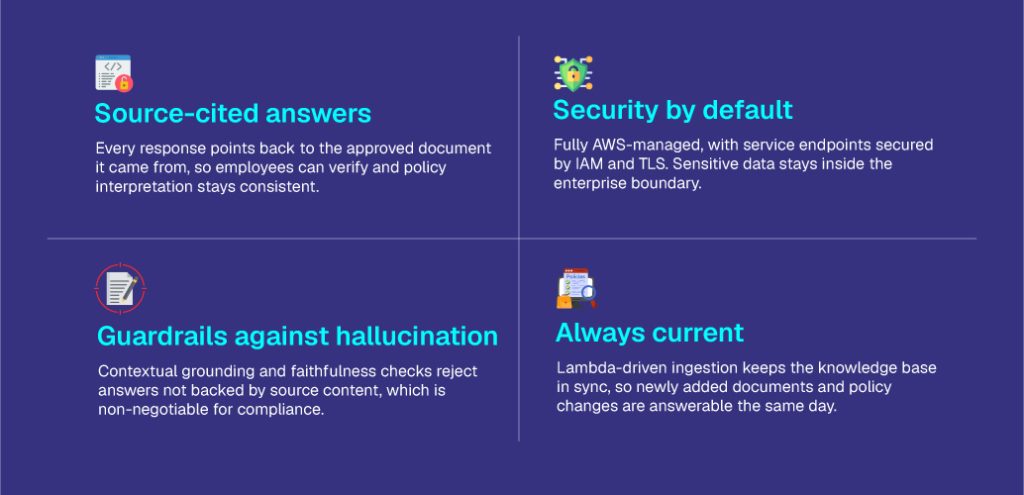
Plenty of RAG demos look impressive and then fall apart in production. In a regulated setting, four things separate a real build from a prototype.
Why this matters beyond banking
Here is the part worth stressing. The architecture does not care what the documents are. Swap regulatory circulars for clinical protocols, contracts, or equipment manuals, and the same pattern serves industry after industry. Banking simply sets the highest bar for trust and compliance. Clear it there, and you have a blueprint that works anywhere knowledge is locked inside documents.
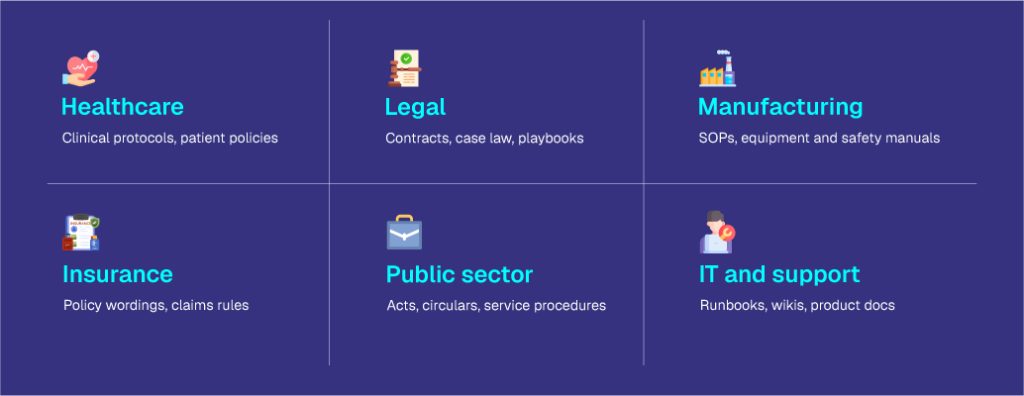
What it costs to run
A common worry is that generative AI is expensive to operate. With a fully managed, serverless stack, it does not have to be. There are no idle servers to pay for. Amazon S3 storage is negligible, OpenSearch Serverless and Bedrock scale with usage, and Lambda runs only when documents change. For a departmental rollout, this typically lands in the low hundreds of dollars a month, a fraction of the productivity it returns. The bigger cost lever is token usage per query, which is controlled by retrieving only the most relevant passages rather than stuffing the whole document into the prompt.
The outcome
Done right, this pattern turns a slow, expert-dependent search process into instant self-service. The numbers below are typical before-and-after targets for a knowledge-heavy deployment of this kind.
Metric | Before | After |
Average time to find information | 20-45 minutes | 2-5 minutes |
Queries resolved without escalation | 40-50% | 85-90% |
Document search accuracy | 50-60% | 90%+ |
New employee time to productivity | 3-4 weeks | 1-2 weeks |
Employee satisfaction (NPS) | 20-30 | 60-70 |
The takeaway
A RAG knowledge assistant is not a magic box you switch on. It is an engineered system built from a clean document repository, sharp retrieval, honest grounding, and real guardrails. Get those right and you get something rare: an assistant people actually trust, that turns years of scattered institutional knowledge into accurate, source-backed answers on demand. Whether the documents are banking circulars, clinical protocols, or equipment manuals, that combination of speed and provable trust is not a nice-to-have. It is the whole point.
Written by the Infimatrix Cloud and AI team.