

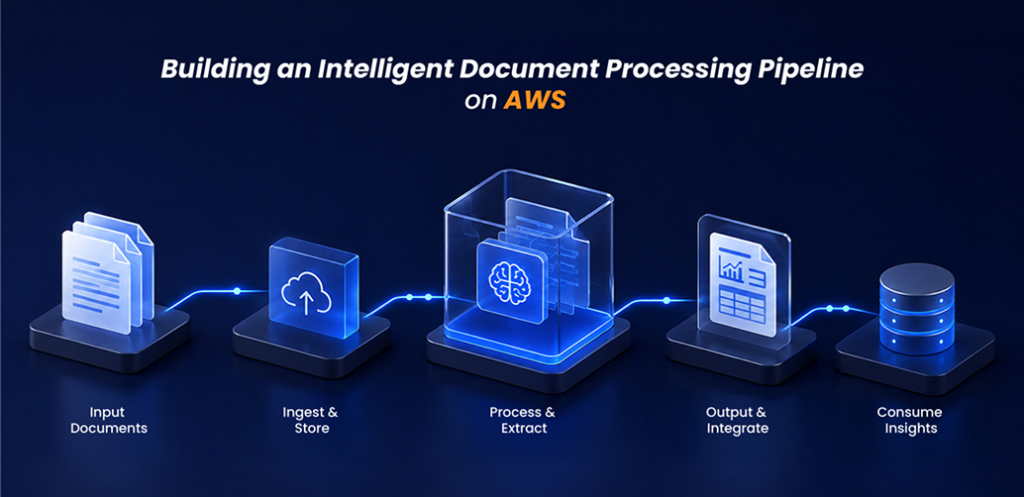
Picture the onboarding desk at any bank. A stack of scanned IDs, address proofs, and application forms lands in someone’s queue, and one by one they read each page and type the details into a core system by hand. It is slow, it is repetitive, and every tired keystroke is a chance for a wrong digit to slip through.
Now multiply that by every invoice, contract, and claim a business handles in a month. That is the quiet cost of documents no one can automatically read. For years the workaround was OCR plus a pile of rules, and it worked right up until a vendor changed a layout or a form used slightly different wording, and then it broke. Intelligent Document Processing takes a smarter path, and it is worth understanding why it finally works.
So what is Intelligent Document Processing?
Intelligent Document Processing (IDP) is a pipeline that combines OCR with foundation models to read a document, work out what it is, pull out the fields that matter, check them, and hand clean structured data to the systems that need it, with a confidence score on every field
The important word is understanding. Older tools recognise characters on a page. A foundation model understands that this is an invoice, that this figure is the total, and that this paragraph is a termination clause. That shift, from reading to understanding, is the whole reason document automation finally feels reliable instead of fragile.
Reading the page was never the hard part.
Trusting the data that comes off it is
How the pipeline works on AWS
IDP is not one model doing everything. It is a set of managed AWS services, each handling one job and passing the result to the next, so a document that lands in storage comes out the other side as clean, verified data.
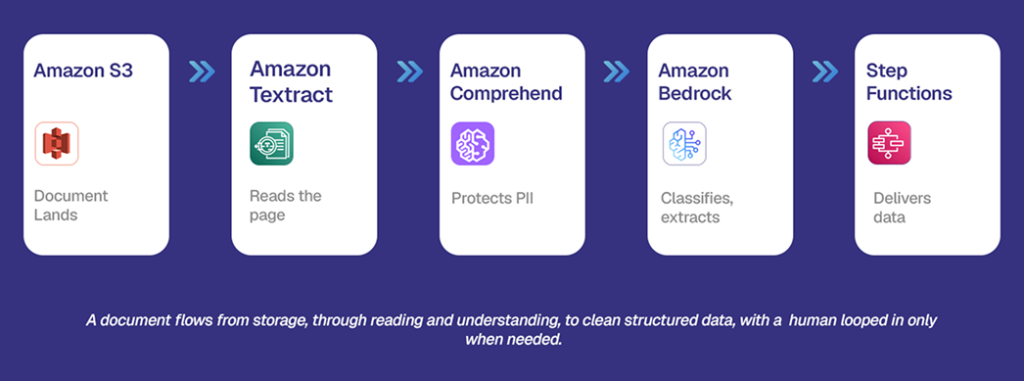
In plain terms: a document lands in Amazon S3, Amazon Textract reads the text, tables, and identity fields off the page, Amazon Comprehend spots and protects anything sensitive, and a foundation model on Amazon Bedrock works out what the document is and pulls the fields that matter, even the awkward free-form ones like a contract clause. AWS Step Functions quietly runs the whole sequence, retries what needs retrying, and routes anything doubtful to a person before it moves on.
Why generative AI changed the game
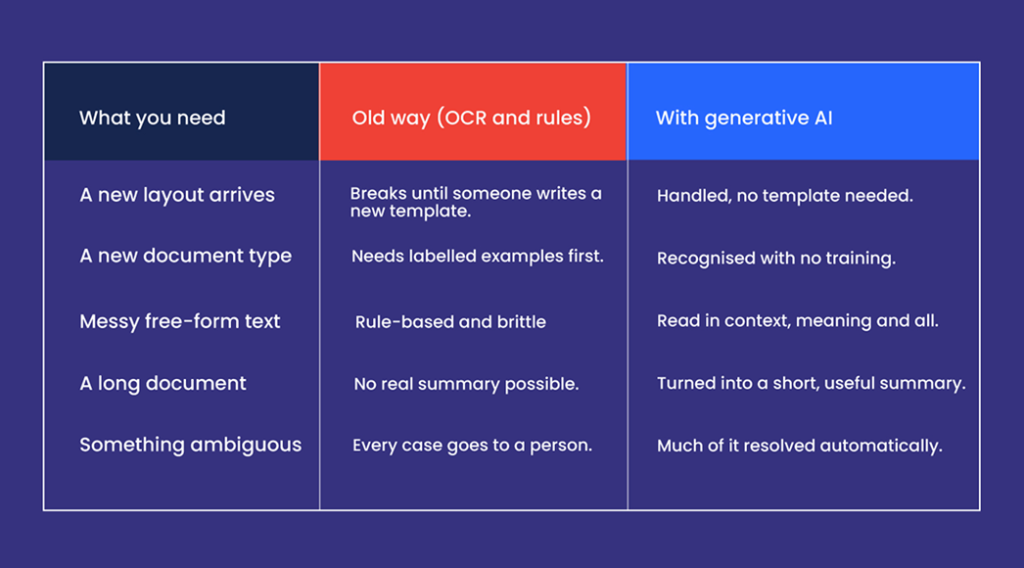
If you have tried document automation before and been burned, here is why this feels different. The old approach leaned on templates and rules, so anything unexpected broke it. A foundation model reads in context instead, which quietly removes the most fragile part of the pipeline.
What a real document looks like going through
Drop a scanned ID and a proof-of-address form into the folder, and moments later you get a clean record back, ready for the systems downstream. It looks something like this.
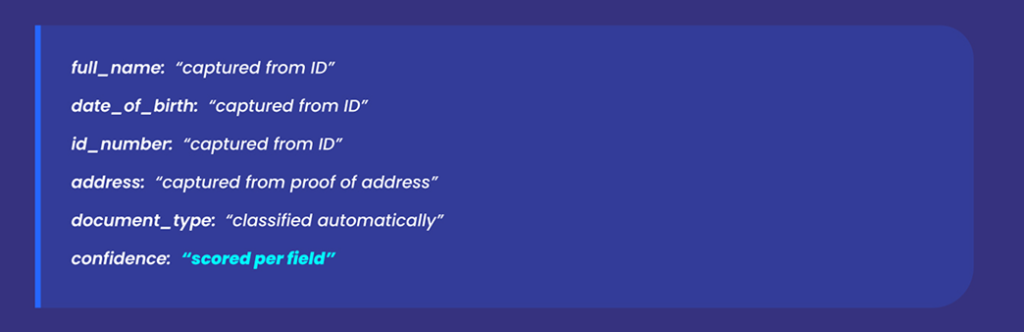
The point is not just the clean fields. It is the confidence score and the audit trail beside them. Reviewers only touch the documents that genuinely need a second look, and every value traces back to the document and the step that produced it. That is what makes the output something a regulated business can actually stand behind.
What separates a demo from production
Plenty of document-AI demos look great on a clean sample and then fall over on a crumpled scan. In a regulated setting, a few things make the difference:
- Confidence, not blind trust. Low-confidence results are escalated to a human automatically, so accuracy is built in rather than hoped for.
- Security by default. Data is encrypted at rest and in transit, access is least privilege, and sensitive fields are handled carefully before anything is stored.
- Auditable by design. Every step and every record is logged, giving you the provable trail that compliance reviews expect.
- Scales without hiring. Serverless and event-driven, so a spike in volume never turns into a backlog.
Frequently asked questions
Does this replace our people?
No. It removes the repetitive keying and lets your team focus on the exceptions and the judgment calls, the work that actually needs a human.
What about documents it gets wrong?
Every field is scored. Anything below the threshold is routed to a reviewer who sees the original and the extracted data side by side, so a bad read is caught before it reaches a downstream system.
Is it expensive to run?
The stack is serverless and consumption-based, so you only pay when documents are actually processed. There are no idle servers, and reading only what each document needs keeps the running cost sensible even at high volume.
Does it only work for banking?
Not at all. The same read, classify, extract, validate pattern handles insurance claims, legal contracts, medical intake forms, and manufacturing paperwork. Banking just sets the highest bar for accuracy, privacy, and audit.
Planning a document automation project on AWS?
The hard part is rarely reading the page. It is building the confidence scoring, the human-in-the-loop review, and the audit trail that make the output trustworthy. That is where a well-designed pipeline earns its place, and where the right build makes all the difference.
Written by the Infimatrix Cloud and AI team.